IN THE PRESS



NOMINATION
SHORTLIST
NOMINATION
SINGER OF THE MONTH
MAY 2026
IN THE PRESS
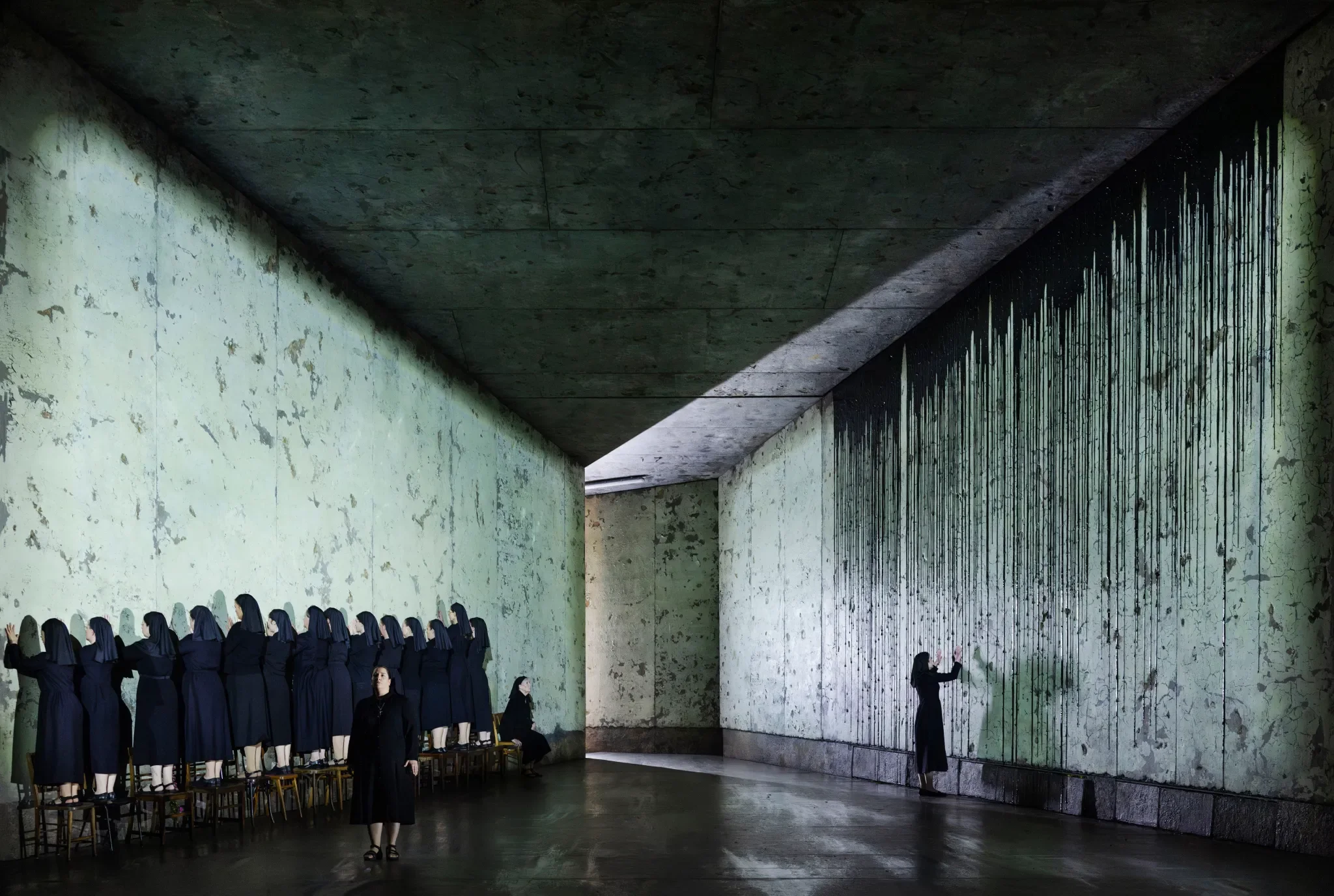
LULU At STAATSTHEATER NÜrnberg
-
TERROR AND TRIUMPH
“In short: a triumph.This is due in large part to the protagonist. Juliana Zara sits on the sofa in a pink negligee, does almost nothing, and yet is already Lulu. One suspects she could just as easily be sitting there in a functional jacket and rubber boots and the effect would be the same. Zara possesses a presence that hovers between erotic shimmer and childlike lightness, which, combined with her exceptional voice, makes her ideal casting [FOR LULU].
Her soprano is bell-bright, with nothing forced even in the much-demanded high register. Even in the most violent coloratura passages, her singing retains a sense of playfulness and sensuality.
“We have finally come to the realization that sensuality is not a weakness, not a surrender to one’s own will, but an immense force placed within us…” This Lulu seems to have fully internalized Alban Berg’s words.”
-
ALBAN BERG’S LULU IMPRESSES IN NUREMBERG
“Among the guests in this new production is, in particular, Juliana Zara, who has already appeared at the Theater an der Wien and the Bavarian State Opera. Her Lulu is an attractive, life-hungry young woman — though not a femme fatale. She is certainly fond of grand gestures and even confronts Schön with combative spirit: “If you sacrifice your old age for me, then you have had my entire youth in return.”
Zara delivered this both scenically and musically with great impact, without any moments of fatigue, elevating her agile, luminous soprano to dramatic heights that seemed as purposeful as the determination of her character’s life path.”
-
LULU AS A DARK BOULEVARD COMEDY
“In this production, Juliana Zara moves about like a free atom in search of happiness in life. Her Lulu is coquettish, self-assured — at times reminiscent of a homage to the recently deceased performance and feminist icon Valie Export, and at others like a completely natural thorn in the rotten flesh of the patriarchy.Vocally and dramatically, Zara can do everything. And she does do everything. Up to the interval (in Act II), the men shatter against her Lulu, who cannot be contained, who simply is who she is — something the men cannot cope with.
Then comes the revenge of the wounded men: the murder of the woman they could not control.”
-
ONLY PREY IN A PREDATOR’S CAGE FULL OF MEN? OPERNHAUS NÜRNBERG PRESENTS A THRILLING “LULU”
“Juliana Zara unfolds an extraordinary presence in the title role. Her Lulu is less a victim than a cunning survivor who understands the rules of the game and turns them against their creators. Her physical strength, her supple agility, her intellectual alertness make this Lulu the commanding force in almost every scene. Her clear, vital soprano — at times cuttingly sharp, at others translucently tender — crowns her the queen of this performance.Lulu is not truly interested in any of the men, not even in their bourgeois prosperity. Instead, she subdues these potential men of violence — rapists, murderers. This is the reenactment of her childhood trauma, which Juliana Zara masters with complete authority in the title role.
…they came, applauded all involved enthusiastically, and celebrated Juliana Zara — the new queen of Nürnberg’s ‘Lulu’ sensation.”
-
MURDER WITH A VIEW
“In fact, this production leaves certain things aside before the interval: the existential dimension, the social precipices, the horror lurking behind the abyss. At the same time, however, the direction pushes clichés aside: Lulu as a male fantasy, as a mere projection surface, as a vamp-like object — that is far less in evidence in Nürnberg.This woman, lustfully circled by the newspaper publisher Dr. Schön, his composing son Alwa, a painter, an athlete, and the lesbian Countess Geschwitz, regains control of the action here. A path upward and toward downfall — because she chooses it.
Of course, this must be embodied with the intensity of Juliana Zara, who changes wigs as she changes identities. The voice: rather lyrical […] yet with considerable penetrating energy. The acting: as high-powered as it is free of cliché.”
-
BOULEVARD OF THE DEAD
“Half the success is already guaranteed by a well-assembled ensemble of character actors who master the exaggeration demanded by the piece — boasting, feigning, slinking, collapsing, tumbling, and flying off the handle.Above all, the American guest Juliana Zara proves to be a true whirlwind, who not only navigates the title role with the utmost musical ingenuity and elegance, but also generates a performative energy that shatters every cliché of the femme fatale languishing on the divan.
The appeal of her deservedly celebrated performance lies in its unselfconsciousness — in the very absence of calculation or predictability in the character she creates, a figure who adapts to situations as they arise. Her Lulu: a creature of instinct, neither good nor evil, as nature produces it — marked by an authentic fickleness, combined with resilience and cold-bloodedness.
These qualities are reflected in Zara’s singing as well. One may easily be taken in by the bell-like timbre, the innocent, childlike cooing and caressing in her voice (and gladly so). But anyone who fails to hear the alarm the moment she soars into the stratosphere has only themselves to blame if they hear the shot only after it has been fired.”
-
“Beginning with the title role, magnificently defended by Juliana Zara. Dramatic projection is there, lyricism is there, intensity is there, and never falters. At times a living flame, at others a blazing pyre, at once a translucent screen for every fantasy projected upon this most paradoxical of Lulu, she makes the role entirely her own. Its formidable challenges (wide intervallic leaps, angular syllabic writing, syncopations and sheer endurance) are mastered with consummate skill. Even in the midst of catastrophe, the voice remains luminous, youthful and incisive, confirming her position as the opera’s dramatic centre of gravity. She cuts through an orchestra that is at times unleashed with the force that only Lulu’sirrepressible transgression can command, and occasionally pushes beyond what seems possible, as in the high D that some consider unattainable in the Lied der Lulu in Act II. Like Elektra, Lulu is a role that is almost impossible to cast. Truly convincing interpreters can be counted on the fingers of one hand. Juliana Zara is the first name that comes to mind.”
“Before I came here, it was the faces of Teresa Stratas, Christine Schafer, Marlis Petersen, Anneliese Rothenberger and, invariably, Louise Brookes, that brought to mind this character who defied taboos, rules and conventions. Now Juliana Zara joins this line-up, bolstered by fond memories of that magnificent performance in Nuremberg.” -
“From both a vocal and dramaturgical perspective, Berg’s opera is essentially a one-woman show, in which all the different human types represented in the text are dominated by the protagonist with a magnetism that, in this production, was rendered with extraordinary expressive force by the performance of Juliana Zara, the thirty-three-year-old Californian singer who had already sung the role in Darmstadt in a production that earned her two nominations — for the Deutscher Theaterpreis Der Faust and the Opus Klassik.
Endowed with a crystalline voice and capable of reaching, without the slightest effort, the high Cs and C-sharps required by the score, and possessing an overflowing stage vitality, the young American singer created a fascinating and strikingly modern portrait of a transgressive young woman — hungry for life and never willing to accept the rules of a morality she rejects, passionate and sincere in presenting herself as she is, without ever seeking excuses or justifications, ambiguous and elusive.
A truly remarkable interpretation for its expressive depth and conceptual maturity, especially in such a young singer.”
“An overwhelming success for a production that is certainly among the best seen on German stages in recent times.”
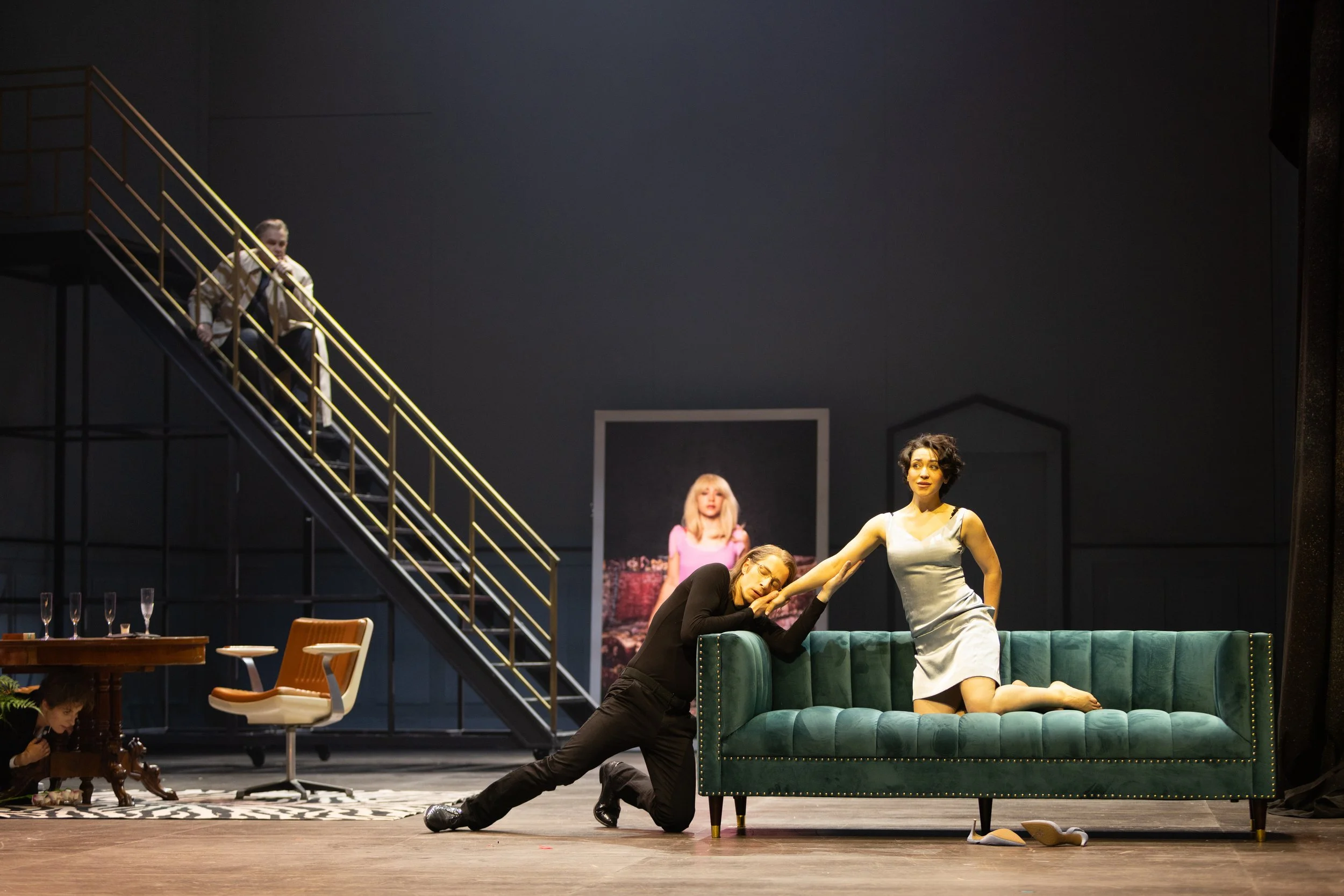
Dialogues des Carmélites AT THE ROYAL DANISH OPERA
-
“The counterpoise resides in Juliana Zara’s Soeur Constance: a presence at once incandescent and luminously sung. In her stage bearing one readily perceives why Poulenc cherished the character so dearly: she is a shaft of light – dancing, singing, caressing, consoling – yet never divested of that lucid apprehension which allows her to grasp, with disarming clarity, the course of events.”
-
“During Dialogues des Carmélites, I experienced something similar. At first, I was unsure I would engage with the nuns’ fate — but as the opera progressed, I felt an unusual depth of empathy and tenderness, not just for one individual, but for an entire group: the seventeen nuns, the first prioress who dies at the end of Act I, her successor, and Blanche.”
“The drama unfolds within the confined framework of a single set: a long corridor framed by two slanted walls. A space brought to life by diagonals. It feels like a tomb — or is it simply the convent chapel?
In the final act, the focus shifts from the individual Blanche to the group of nuns as an indivisible entity.
A single fluorescent tube hanging at the back of the space pulls us out of 1789 into a more modern time frame, while also suggesting that this refuge may just as well be a prison. The costumes, also designed by Katrin Lea Tag, remain in shades of grey and white. Only Blanche initially wears a bright yellow dress.
Barrie Kosky’s direction is taut, and the action flows effortlessly without disrupting the narrative momentum. The Royal Danish Orchestra plays vibrantly under Asher Fisch. Soprano Elena Tsallagova portrays Blanche with intensity and dedication, fully justifying the thunderous applause she received at curtain call.
Among the evening’s many strong performances were also Jens Søndergaard (Marquis de la Force), Juan Francisco Gatell (Chevalier de la Force), Doris Lamprecht (Mme de Croissy), Sine Bundgaard (Mme Lidoine), Diana Haller (Mère Marie), and Juliana Zara (Sister Constance).”
-
“Poulenc’s music can be grand and even pompous, but even in the scene where the Prioress, on her deathbed, struggles to find words while Blanche sits at her side, Poulenc brings forth lighter tones. There is no darkness without light, and although Poulenc’s libretto allows few bright thoughts to break through the thicket of downfall and shattered dreams that Dialogues des Carmélites truly is, the French composer possesses both the heart and the artistic insight to let his music remain luminous precisely when everything appears darkest.
It was conductor Asher Fisch who led the Royal Danish Orchestra at the premiere, and the orchestra — along with the Royal Danish Opera Chorus — once again showed themselves at their very best.
Not least in the opera’s dramatic final scenes, where an enraged crowd breaks through the walls of the convent, demanding that the nuns’ heads should roll. It sent shivers down the spine.
“And the atmosphere in the opera became no less unsettling, as Barrie Kosky has chosen to let the guillotine have the final word. You see only the nuns’ black sandals being thrown against a wall, pair after pair, while you hear the heavy thud as the guillotine’s sharp blade falls. It is so beautiful in all its cruelty that it is almost unbearable.But if you have the chance — and still miss Barrie Kosky’s Dialogues des Carmélites at the Opera — you will regret it.”
New Years Concert WITH HENDRIK VESTMANN AND THE ROYAL DANISH ORCHESTRA
-
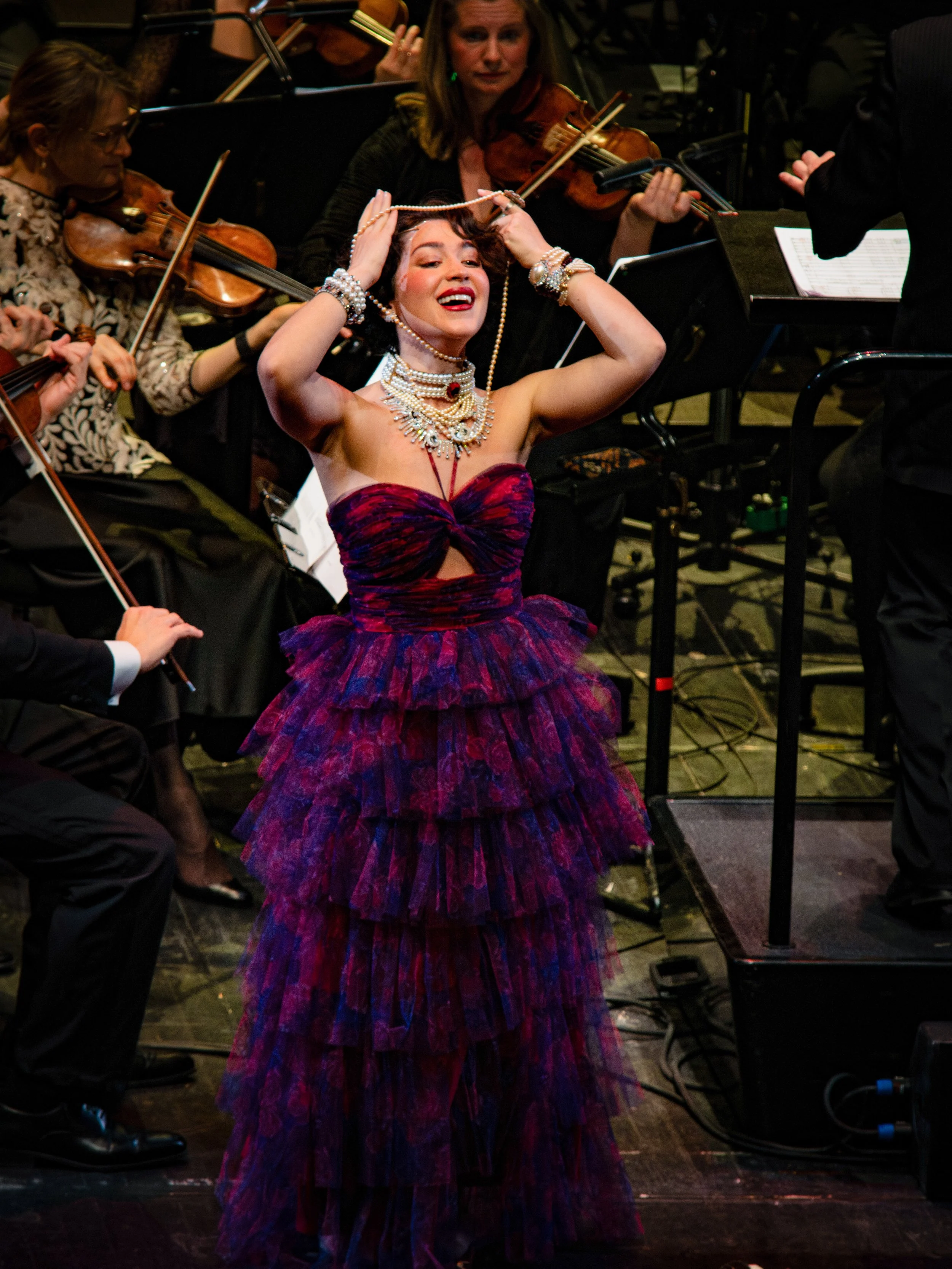
“With the American soprano Juliana Zara as well as tenor Jacob Skov Andersen of the Royal Opera on stage, works such as Franz Lehár’s Dein ist mein ganzes Herz from The Land of Smiles and Jeanine Tesori’s The Girl in 14G were able to fill the Opera’s large stage with complete naturalness. It was not merely captivatingly beautiful; it also very much served as a reminder of what we carry with us into the new year.”
-
“Soprano Juliana Zara and tenor Jacob Skov Andersen are responsible for the vocal numbers, and here, too, there is no doubt about their credentials. Particularly overwhelming is Juliana Zara in her musically schizophrenic “The Girl in 14G” by Jeanine Tesori, which combines musical theatre style with jazz and opera…”
“This year’s New Year’s Concert at the Opera succeeds above all because it takes the music seriously without treating it solemnly. There are several entertaining surprises along the way, and plenty to laugh at. But it is the musical superiority of the Royal Danish Orchestra that makes this New Year tradition worth holding on to.”
Alice in Wonderland At Theater an der Wien
-
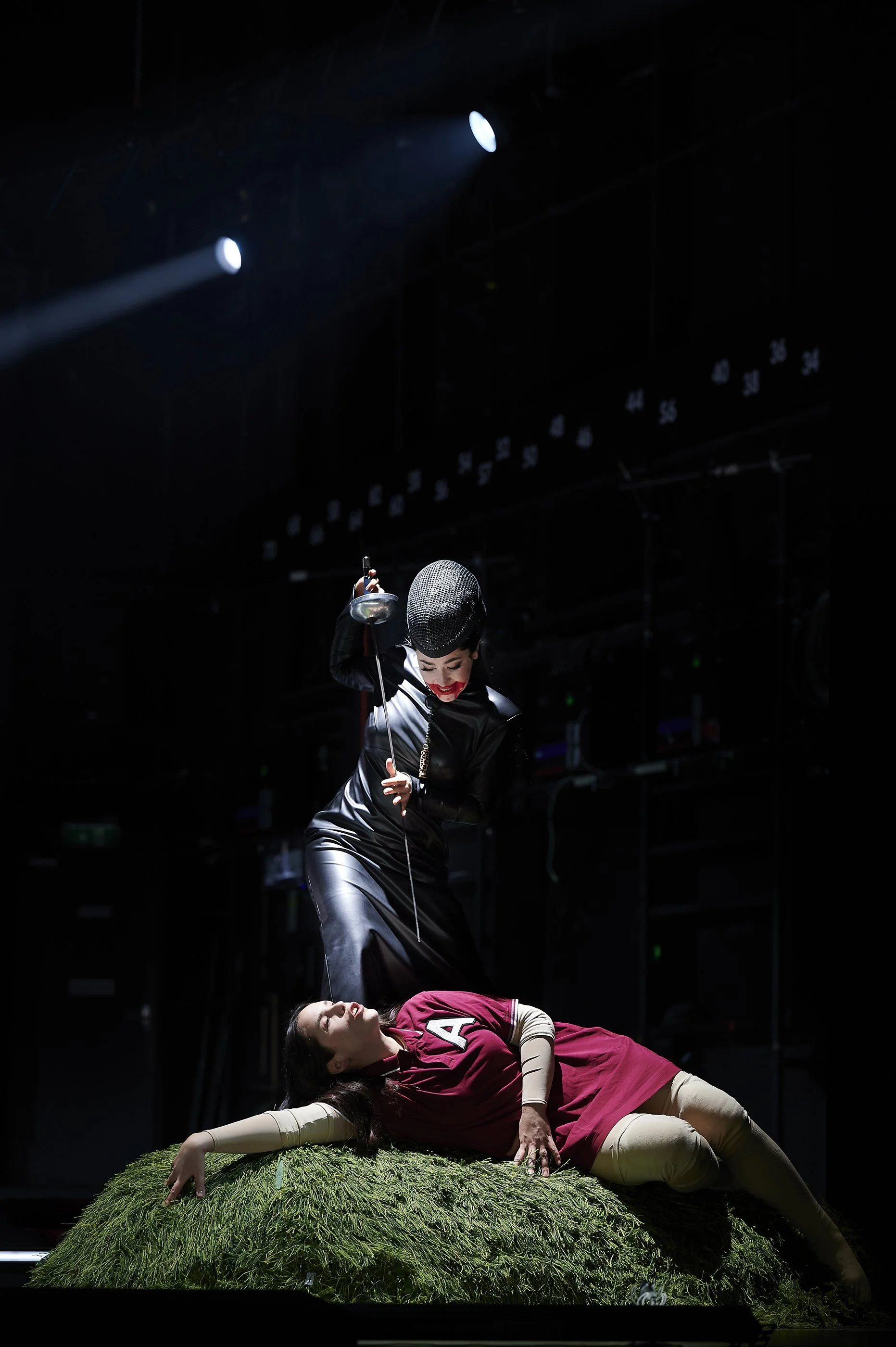
BEACON OF THE CHESHIRE CAT / (LEUCHTFEUER DER CHESHIRE CAT)
“Overall, Alice in Wonderland was musically realized to perfection, with particular praise due to the casting department for its choice of singers.”
“The coloratura soprano Juliana Zara, as the Cheshire Cat, continuously launched vocal beacons without the slightest hint of insecurity…” -
“Juliana Zara’s Cheshire Cat slinks through the texture with silvery tone and an insouciant smile that somehow remains audible even when she is offstage.”
“Wonderland here is not a safe playground, but a place where the rules are fluid and the self can fracture. That tension gives the show its charge. By the final curtain, as the grassy world circles once more and Alice’s question still hangs in the air, one has the sense of having experienced a complete and coherent artistic vision: composer, performers and production team pulling in the same direction. For Theater an der Wien, this Alice in Wonderland is not just a notable Austrian premiere; it is a landmark demonstration of how bold contemporary opera, given the right care and imagination, can speak directly and powerfully to today’s audiences.”
-
“…the magnificent coloratura voices of Juliana Zara as the Cheshire Cat and Mandy Fredrich as the Queen of Hearts.”
-
“The Theater an der Wien shows what new music theatre is capable of: Unsuk Chin’s Alice in Wonderland enchants and unsettles using every means of art.”
“As the Cheshire Cat, you can hear that Juliana Zara also makes a sensation as Lulu and Zerbinetta…“Operas succeed this comprehensively only rarely.”
-
“…applause is due for the vocal peak performances of the evening[…] Juliana Zara as the vocally powerful Cheshire Cat.”
Puzzles and Games with EnRICO ONOFRI AND THE Munich Chamber Orchestra
-
IN A WONDERLAND OF MUSIC
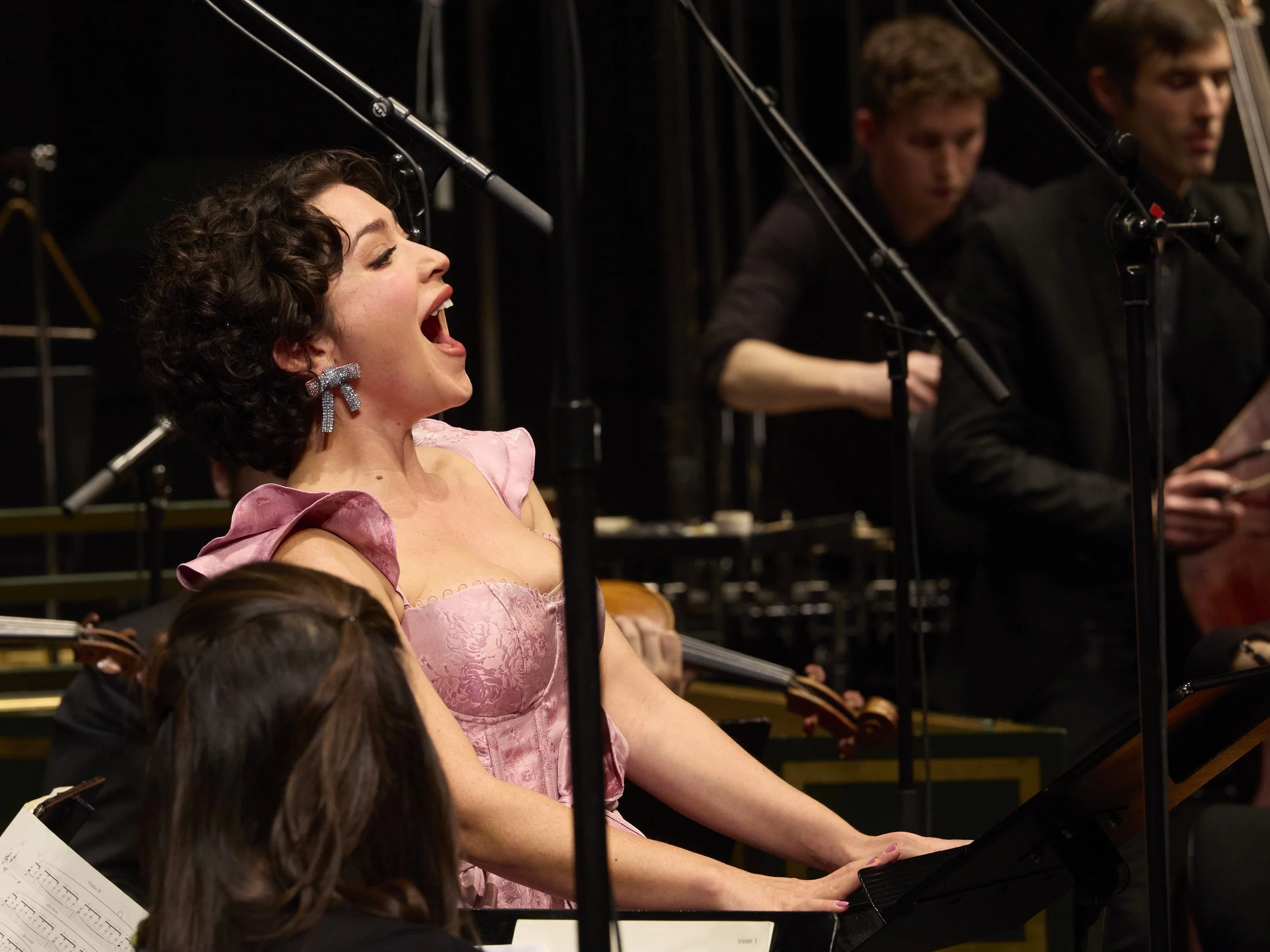
“Exquisitely crafted: soprano Juliana Zara slips into many roles from Unsuk Chin’s opera Alice in Wonderland, accompanied with somnambulistic assurance by the Munich Chamber Orchestra.”
“Ten short excerpts from Unsuk Chin’s opera Alice in Wonderland captivate us, which Juliana Zara shapes exquisitely with her bright, high soprano. As absurd and humorous as the texts may be, their musical setting is all the more compelling—feather-lightly accompanied by an almost chamber-music-like orchestra that comments subtly, but can also offer resistance or provide just the right accompaniment to the spoken text.”
“Dreamlike are many of the sequences in which Zara slips into multiple roles—such as Alice herself, or the Mouse in the “Schwanz-Schwank.” At the end comes the cynical monologue of the Duchess: “Speak harshly to your little boy and strike him, push him, if he wants to sneeze.” Sometimes the pieces flow seamlessly into one another, sometimes they are sharply separated—always performed with somnambulistic assurance by the Munich Chamber Orchestra, and sung and spoken no less beautifully by Juliana Zara.” -
WITH PLEASURE IN WONDERLAND
“Soprano Juliana Zara travelled from [Vienna] to present the Munich audiences with ‘Puzzles and Games from Alice in Wonderland’. She and the orchestra, energized by Enrico Onofri, provided great enjoyment. Zara, formerly in the opera studio of the State Opera, enchanted in the ‘Dada’ songs with her uniquely colored voice, at times velvety, at times ringing like a bell.”
DAS RHEINGOLD WITH PATRICK HAHN And THE WUPPERTAL SYMPHONY ORCHESTRA
-
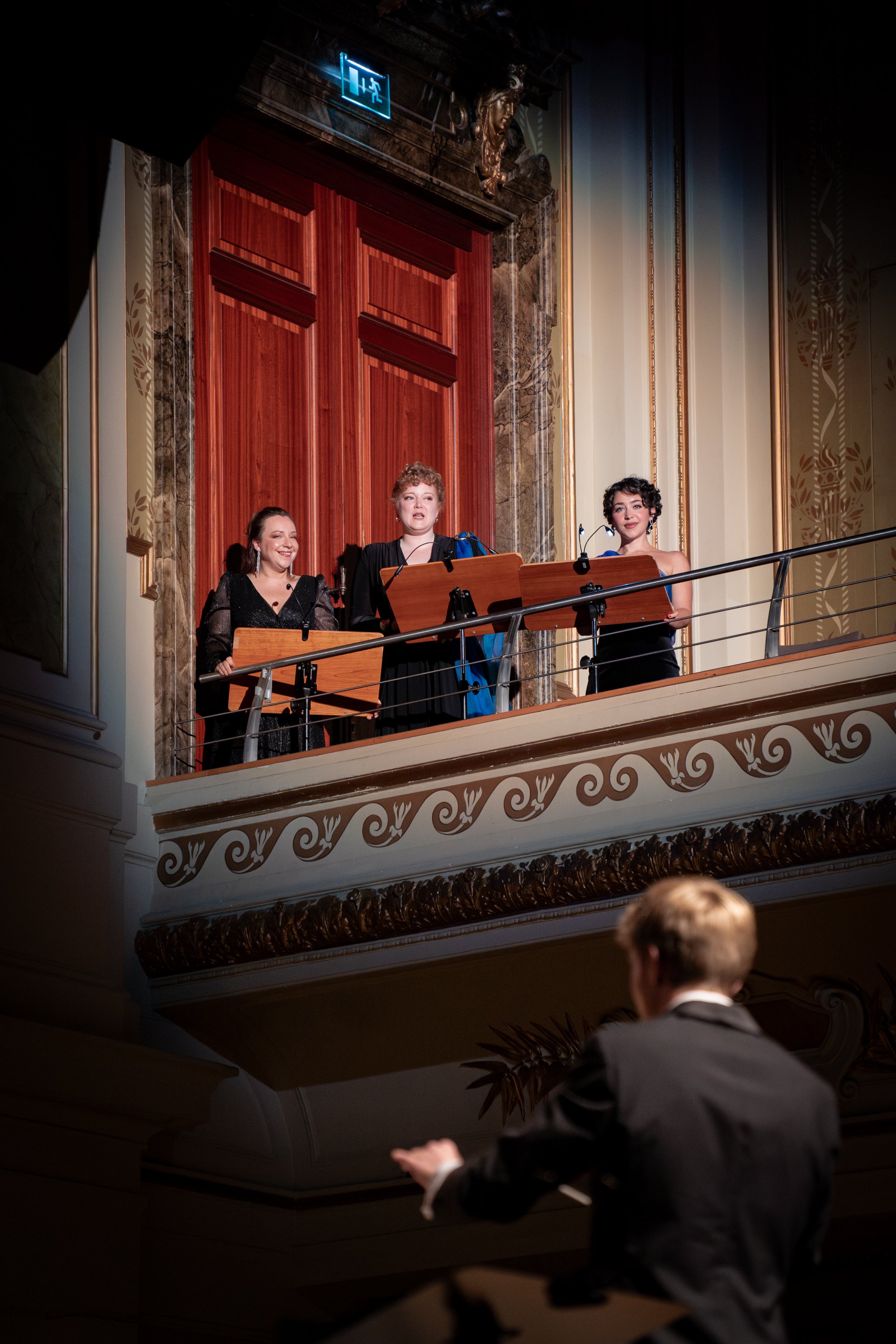
“Musically, the dream ends with the ‘Weia-Waga’ of the three Rhinemaidens (Marta Herman as Flosshilde, Edith Grossman as Wellgunde, Juliana Zara as Woglinde)… Pure and with great agility of their wonderful voices, the three conveyed—from the gallery high up on the right—the undisturbed bliss of the Golden Age.
Vocally, it was once again the Rhinemaidens who thrilled the audience, and with a splendid, expansive final apotheosis, the excellently performing Wuppertal Symphony Orchestra under the sovereign, clear, and attentive direction of Patrick Hahn naturally crowned the evening.
The grand concert evening, held in the sold-out main hall, was greeted with prolonged applause, and Wagner enthusiasts are already looking forward to the upcoming performances.”
-
“The Rhinemaidens (Juliana Zara, Edith Grossman, and Marta Herman) impress as Woglinde, Wellgunde, and Flosshilde with pure three-part harmony and clear diction, descending from the gallery and continuing their mischievous, teasing game with the Nibelung both on stage and in the hall.
It is not only the final scene that the conductor Patrick Hahn, born in Graz in 1995, and his Wuppertal Symphony Orchestra savor musically in grand style. As the last note sounds, a tremendous outburst of applause erupts in the hall. After 40 years, the people of Wuppertal have finally experienced Wagner’s monumental work once again. The soloists and the orchestra are celebrated with frenzied enthusiasm.”
-
“Added to this are vocal qualities of the highest order. For almost without exception, the singers present brilliant, resonant Wagnerian voices. The Rhinemaidens Woglinde, Wellgunde, and Flosshilde are portrayed by Juliana Zara—also appearing as the goddess Freia—Edith Grossman, and Marta Herman. They impress with clear articulation and radiant voices.
Hardly has the last note faded away when the audience in the sold-out hall rises to its feet in thunderous applause that seems to have no end.”
-
“Triumph for Patrick Hahn in the historic Stadthalle Wuppertal.
For his version, conceived as a conversational piece with a large orchestra, a distinguished ensemble of top-class soloists was assembled.
The delightful Juliana Zara …
The performances of the singers were particularly impressive—especially considering that they formed a ‘project ensemble’ and had only two days of rehearsal with the orchestra beforehand.”
-
“The Rhinemaidens (superb: Juliana Zara, Edith Grossman, and Marta Herman)…
The enthusiastic audience gives fifteen minutes of frenzied applause. The ‘preliminary evening’ of the monumental music drama has been an outstanding success.”
-
“Juliana Zara, Edith Grossman, and Marta Herman impress as Woglinde, Wellgunde, and Flosshilde with pure three-part harmony and clear diction.
At the end, the Rhinemaidens are placed in the dark at the back of the gallery during their lament, emphasizing that their weeping does not reach the gods, who then, to the splendid final tones of the music—magnificently savored by Hahn and the Wuppertal Symphony Orchestra—proceed to Valhalla. As soon as the last note fades, a tremendous outburst of applause erupts in the hall. The soloists and the orchestra are rightly celebrated with frenzied enthusiasm, leaving one hardly able to wait until January, when the Ring continues in Wuppertal.”
DAS JAGDEWEHR AT BAYERSICHE STAATSOPER CUVILLES THEATER
-
“… above all Juliana Zara as lover's daughter Shoko, seem[s] to blossom in the soprano stratosphere and demonstrate[s] that rounded tones and textual presence are possible at every point on the musical scale and far beyond.”
-
“A quintet that truly gives everything here, singing with the emotions largely denied by the staging. Foremost among them is Xenia Puskarz Thomas, whose sonorous mezzo provides a captivating counterbalance to the wildly ornamented flights of her soprano colleagues Juliana Zara and Eirin Rognerud. And although the female figures are clearly at the center, baritone Vitor Bispo also knows how to assert himself with equal confidence, as does Dafydd Jones, who slips with great eloquence into the role of the narrator with his slender, instrumentally guided tenor. Five voices from whom one hopes to hear much more in the future.”
-
“The three singers (Juliana Zara as Shoko, Eirin Rognerud as Midori, Xenia Puskarz Thomas as Saiko) embody their roles with warmth and restraint, without ever slipping into sentimentality, yet they are also capable of virtuosic coloratura, as this artful score occasionally demands.”

NOMINATIONS
Ariadne auf Naxos at Nederlandse Reisoper
-
“Zerbinetta’s “A moment means nothing, a glance means all… I am so lonely” in the Prologue was the emotional highlight of the evening, her vulnerability and the unlikely attraction between the two feeling dangerously real. ... Zara's seductive trills and tireless vocal acrobatics were dazzling. It was not Bacchus, the “newer God” to whom we ultimately surrender, but Zerbinetta herself...”
-
“What a virtuosity and clarity she showed in Grossmächtige Prinzessin... As a spectator, you couldn't help but join in.”
-
“Zerbinetta’s long-awaited exuberant aria Großmächtige Prinzessin finds an enchanting performer in the American Juliana Zara: with her costume sparkling in the spotlight, she flutters like a swallow from one coloratura to the next. What an enrichment that the Reisopera tours the provinces with such vocal highlights.”
-
“[The] duet with Zerbinetta (Juliana Zara) was phenomenal, not least because of the deliciously singing Californian soprano Zara: what ease, what elegance, but also expressiveness and empathy. Her dog-toiling aria later in the evening also sounded flawless and senent, with her remaining warm and penetrating in the very many high notes and coloratures, truly not a sincure in the somewhat dry acoustics (fortunately the excellent acoustically shaped decor helped well). She was the star of the evening...”
-
“Juliana Zara does it all in a sexy Moulin Rouge-minded costume full of feathers and with delicious vocal acrobatics. That coupled with a sparkling interpretation and a never too far-reaching, frivolous and sensual physicality, make her Zerbinetta not only a showstopper, but also a fully integrated character in the narrative.”
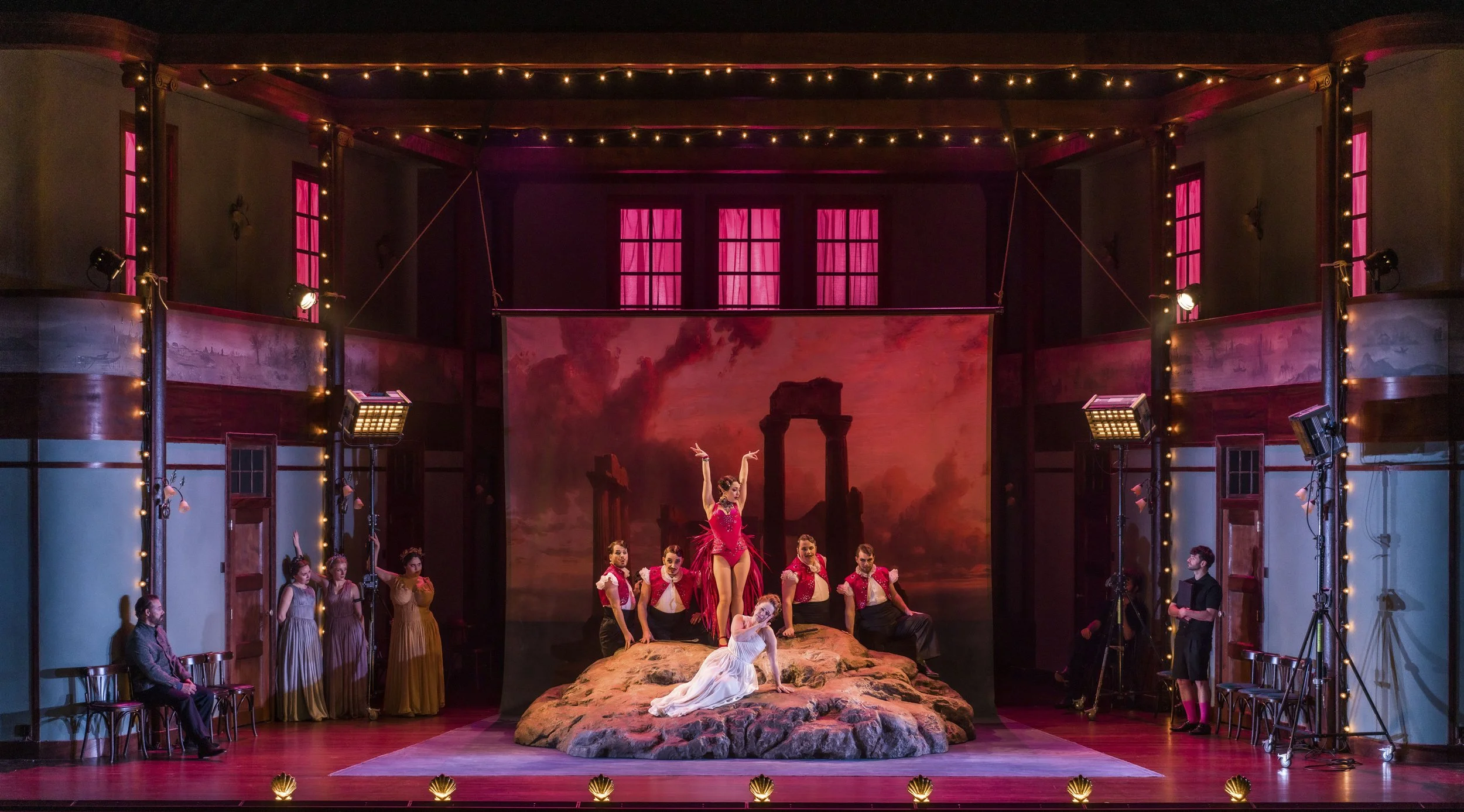
MKO SONGBOOK WITH NACHO DE PAZ AND THE MUNICH CHAMBER ORCHESTRA
-
“She is a vocal powerhouse, giving Paul Clan's words the consistency Coates demands – sometimes in long, taut lines, sometimes as a viscous drop, yet striking and with pure beauty of sound.”
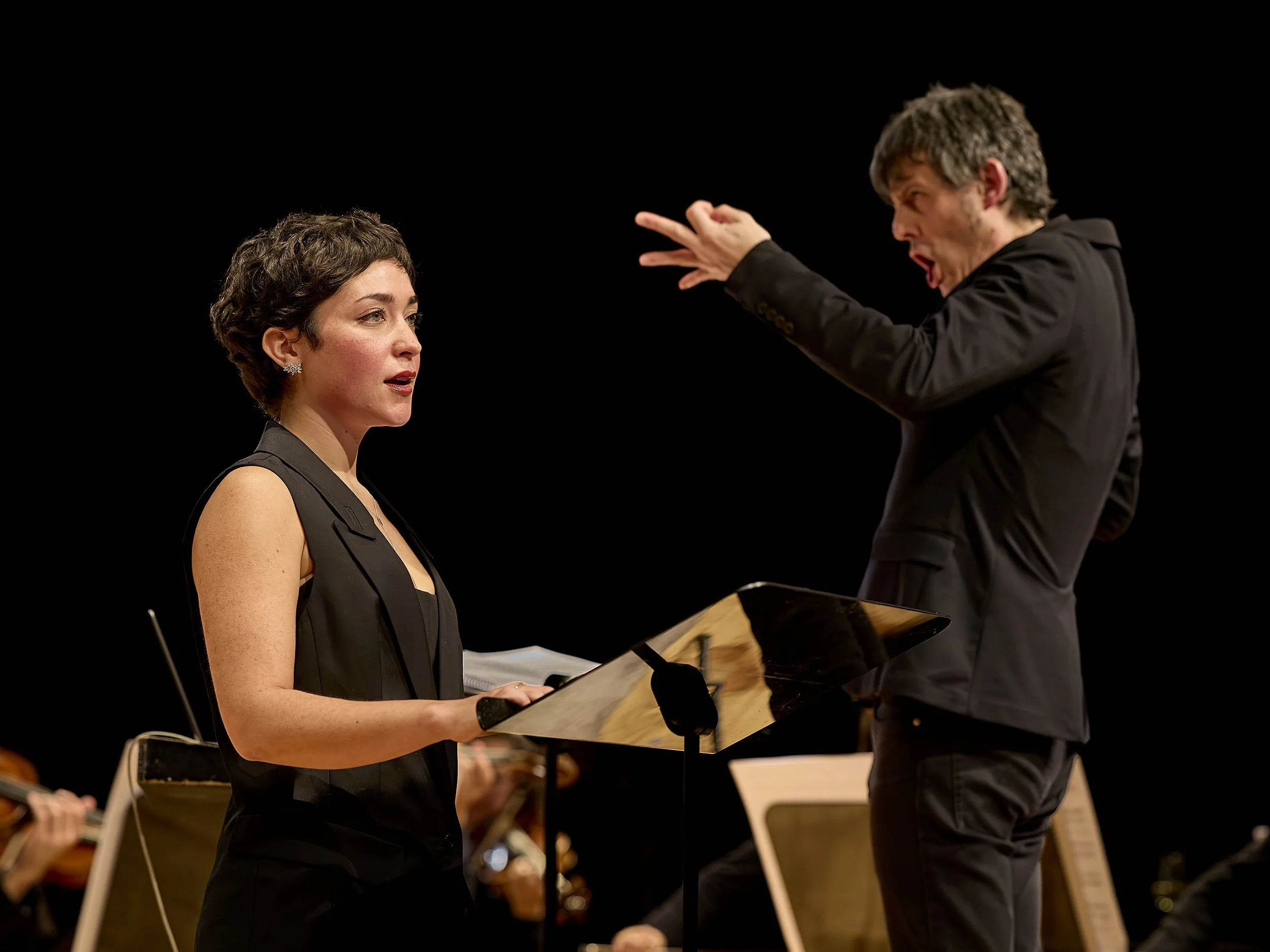
PUZZLES AND GAMES at Carnegie Hall with Sejong Soloists
-
“Making her Carnegie debut tonight, soprano Juliana Zara was the soloist in the Unsuk Chin work, a daunting 20-minutes of singing which at times carries the singer into the highest range of the soprano voice. Ms. Zara never seemed daunted by the vocal writing: in fact, she seemed to revel in it."
"In Cat's Aria, Ms. Zara ventured impressively into the upper extremes of the soprano range, lingering there is a series of amazing (and intentionally annoying) meows-in-alt."
"Ms. Zara didn't simply manage it, she triumphed over it - as cymbal crashes bring this dazzling, quirky piece to a close. The soprano basked in a shouting ovation from the crowd, so truly deserved; she graciously signaled her thanks to the musicians and the Maestro.”
-
“American soprano Juliana Zara, who's spent much of her career in Europe, delivered a wild, no-holds-barred performance..."
"While the Sejong players (conducted by Earl Lee) were uniformly excellent, Zara stole the show; keep an eye out for her on an opera stage near you."
lulu at staatstheater Darmstadt
-
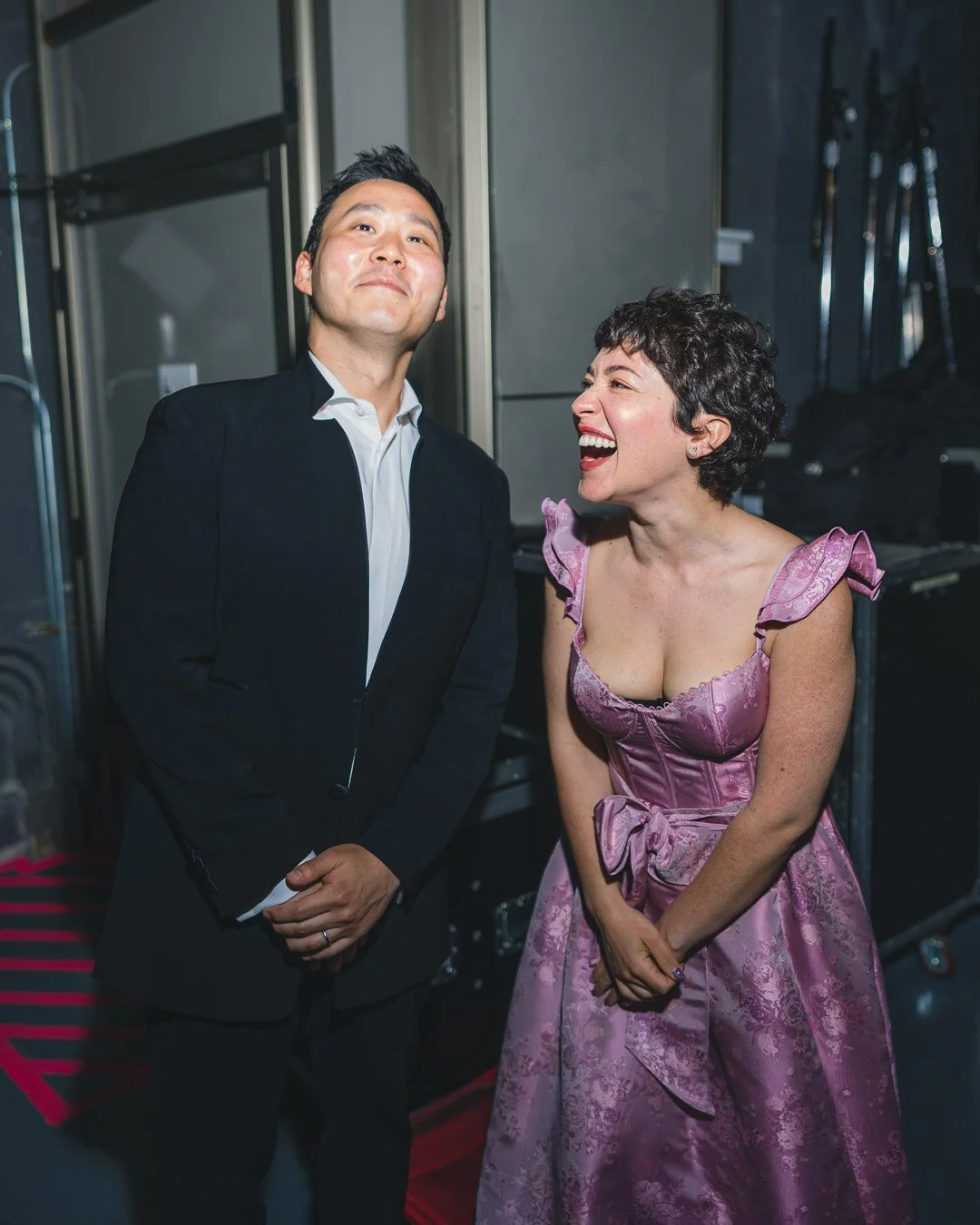
“The brilliant… Juliana Zara, whose soprano sounds glassy clear, high, pure and at the same time completely unstrained, plays a terrifically noncommittal Lulu who is nevertheless devoted, in that uniquely Lulu-like way. So unbelievably youthful, fit and without exaltation, she conquers the role and she does so until the end, without any tiredness that so often characterizes the role.”
-
“Her Lulu in the opera of the same name at the Staatstheater Darmstadt was an event that made waves throughout Germany in the recent season. In Ewa Maria Höckmayr's production, the American coloratura soprano juggles with male fantasies and plays them against each other with virtuosity. Zara's Lulu moves across the stage with the infinite lightness of being until she gets caught up in the mills of sex work and is physically and emotionally crushed. The compelling acting is matched by stupendous vocal merits. Juliana Zara's voice is also ideal for this delicate role. Slender, fluid and with weightlessly dabbed top notes, she exuded that rare vocal mercury which the role absolutely needs and which makes it a phenomenon in the first place. Not in a metropolis, but on the edge of the Odenwald.”
-
“Above all, Juliana Zara in the title role proves her central part in extreme complexity. She succeeds, despite a permanent onstage presence, to keep a secret. Vocally, the young Californian soprano is an ideal choice because, in addition to her stage presence, she possesses the certainty in the extreme high notes that Berg expressly demands. Thus Zara maintains the desirable fascination of Lulu in the second part of the opera as well, embodying Lulu’s descent with dissecting sharpness and clarity.”
-
“For Zara, it is a highlight of her young career. For years, the soprano has been dealing with this complex part, with this dazzling character, you can feel it in every moment. She spreads a fantastic spectrum of vocal colors and expression: Seductive oaths with velvety soft timbre, the ecstatic top notes clear and electrifying when her Lulu sings the misery of the soul.”
-
“Simply magnificent... Juliana sings this insane role with an ease that is very impressive... She plays the ambivalent Lulu very convincingly, sometimes very fragile, then again very antagonistic, and all this in this small space, on this pedestal that is maybe a good metre long. That was really incredible to watch.”

Alice in Wonderland At Concertgebouw Zaterdag Matinee
-
“...in addition to her breakneck-beautiful coloratura, she impressed with her natural sounding booming laughter (as the Cheshire Cat).”
-
“Juliana Zara virtuosically crooned as the Cheshire Cat...”
-
“Juliana Zara as Cheshire Cat looked equally so enchanting, and she sang accordingly.”

l’elisir d’amore at staatstheater darmstadt
-
“Adina is ravishingly embodied by Juliana Zara. Zara lets her focused soprano voice flatter, glitter and shine according to all the rules of the art of seduction. She convincingly and movingly transforms the flighty love fugitive into a being deeply in love who has to capitulate to the overwhelming power of her own feelings.”
-
“Juliana Zara shines as Adina.”
“There was even an extra round of applause for her octopus skirt with tentacles.”
-
“Juliana Zara as Adina is in no way inferior to him in the audience's favor, effortlessly serving up her coloratura lines with a clear soprano…”
-
“The soloist roles are also ideally cast, with the soprano Juliana Zara, a highly expressive Lulu by Alban Berg in Darmstadt last season, and now, a completely relaxed bel-canto singer as Adina…
Everyone finds happiness in Darmstadt.”
Alcina at Staatstheater Darmstadt
-
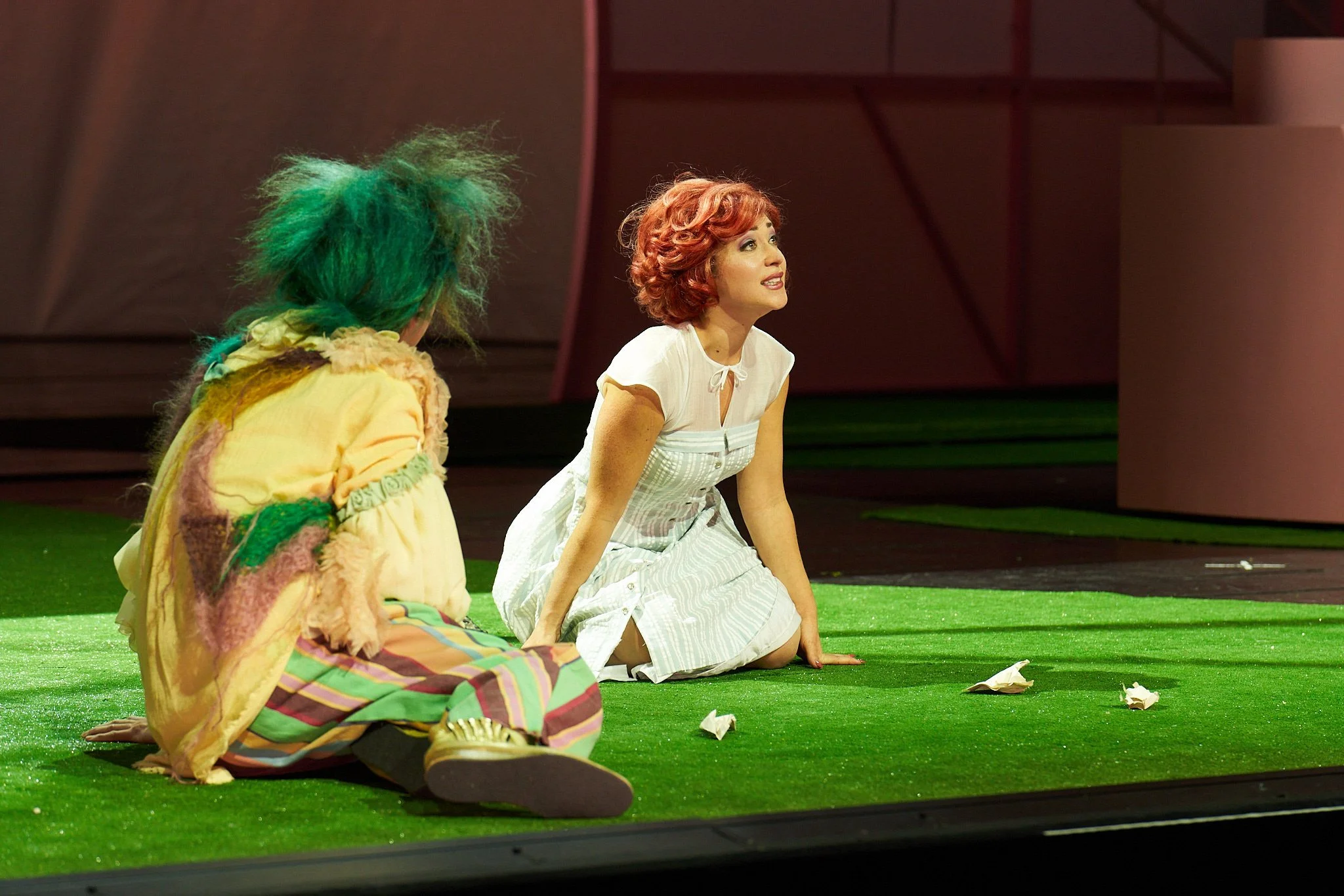
“Juliana Zara as Alcina's softer, silvery-singing sister Morgana is in a class of her own.”
-
“Audience favorite Juliana Zara, as the love-struck Morgana, is given the dramaturgically dispensable longest number. But it is worth listening to Handel's heavenly lengths.”
"Juliana Zara... also shines as an actress”

LES CONTES D’OFFMANN AT STAATSTHEATER DARMSTADT
-
“Juliana Zara's performance is magnificent. Her movements are precisely choreographed. Great acting combined with singing. She brings out the doll-like qualities and, as a viewer, one truly enjoys her movements and her performance.”
-
“… from the razor-sharp coloratura, which Juliana Zara underpins with grotesquely exaggerated movements of the puppet Olympia…”
-
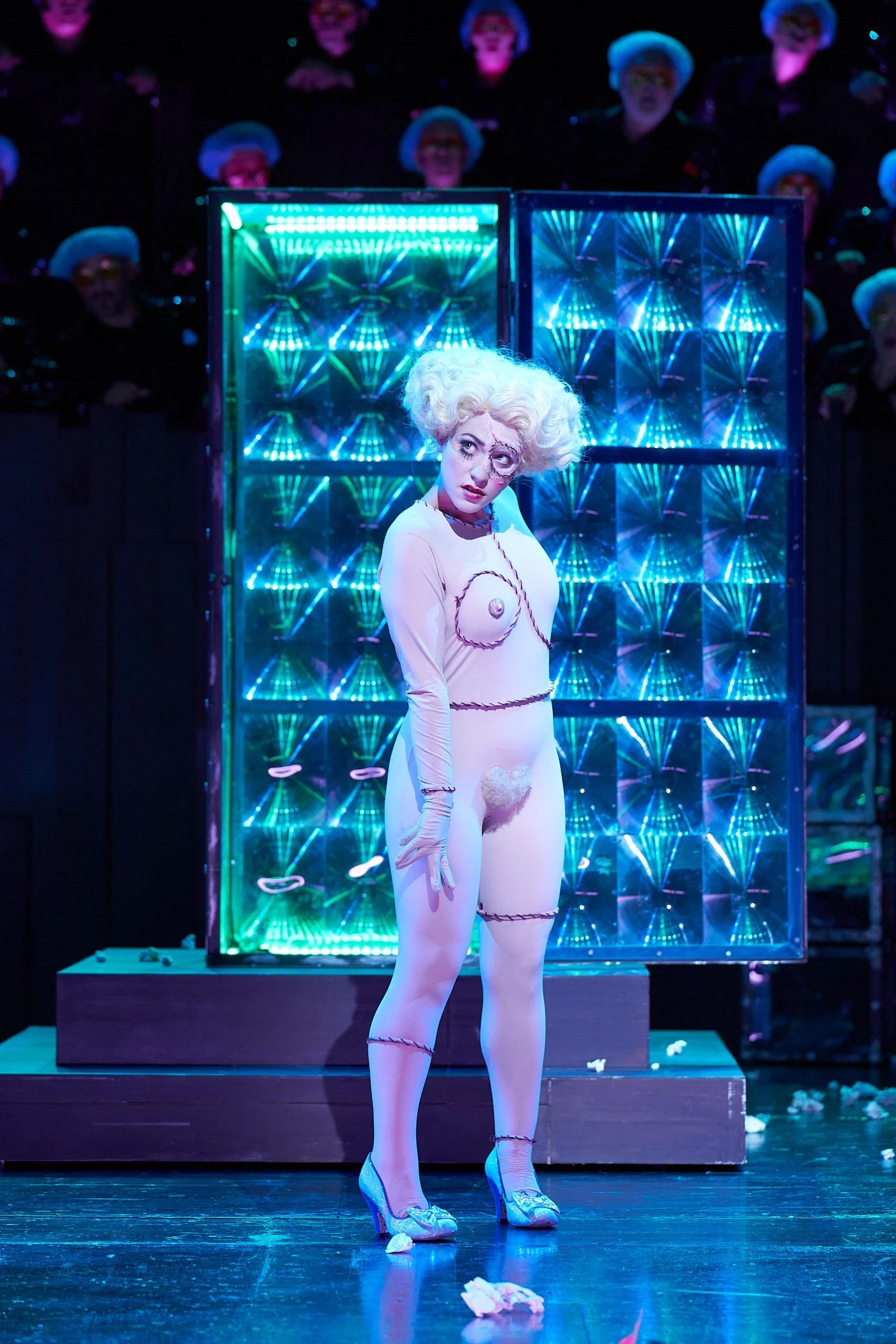
“Juliana Zara gives the most virtuoso performance as Olympia. Between her breakneck coloraturas, the soprano acts like a creature from a Frankenstein laboratory - a sewn-up creature in sky blue with only one breast and twisted limbs. She is not entirely harmless: in an unobserved moment, she greedily bites into a pigeon.”
-
“Juliana Zara is a grandiose Olympia…”
DON GIOVANNI AM STAATSTHEATER DARMSTADT
-
“Juliana Zara also masters the role of Zerlina — too often unjustly dismissed as a minor character — with vocal and dramatic conviction, and for a time dominates the stage.”
-
“With Juliana Zara, Zerlina sings with silvery delicacy, yet can summon great sadness.”
-
“And as the young peasant couple Zerlina and Masetto, Juliana Zara and Eric Ander contribute charmingly to letting this new Darmstadt Don Giovanni move lightly and nimbly toward its downfall.”
-
“Mozart’s way of showing through musical means how the three women of the piece are both angered and, with open eyes, still aroused by the Don Giovanni principle is excellently brought out by the singers: Megan Marie Hart as Donna Anna, outstanding in dramatic quality; Solgerd Isalv as Donna Elvira, most impressive in her shift toward the lyrical; and Juliana Zara as Zerlina, the most modern, active, and youthful figure.”

MYSTERIES OF THE MACABRE WITH WUPPERTAL SYMPHONY ORCHESTRA
-
“In three arias for coloratura soprano, this comprehensive worldview was, so to speak, condensed and concentrated. Centuries of music history appear here musically broken down into pure nonsense, ironically distorted with quotations, pseudo-quotations, pop music, doorbells, brushing the grand piano strings, and very, very deep trombone sounds.
The excellently agile Juliana Zara, vocally confident even in the highest registers, enchanted the audience with this music — occasionally even driving the general music director from his podium. He turned to the audience and complained bitterly. The text, at any rate, was serious and mad at once, here a sample: ‘Morbid! Perfidious! Threatening! Dangerous! Deadly. Measures! Measures! Measures? Measures? Kukuridu! Cock-a-doodle-doo! He is coming. He is coming…’. Frenzied applause was the result, so that there was even an encore before the interval. With the aria Glitter and Be Gay(Candide, Leonard Bernstein) and her radiant coloratura, she finally swept the audience away, who again thanked her with prolonged applause.”
-
“In Ligeti’s Mysteries of the Macabre, Juliana Zara takes it to the extreme: theatrical, clownish, and with unbridled energy she bursts through everything that defines a normal performance with orchestra. Juliana delivers a brilliant vocal and acting performance and is celebrated with storms of enthusiasm.”